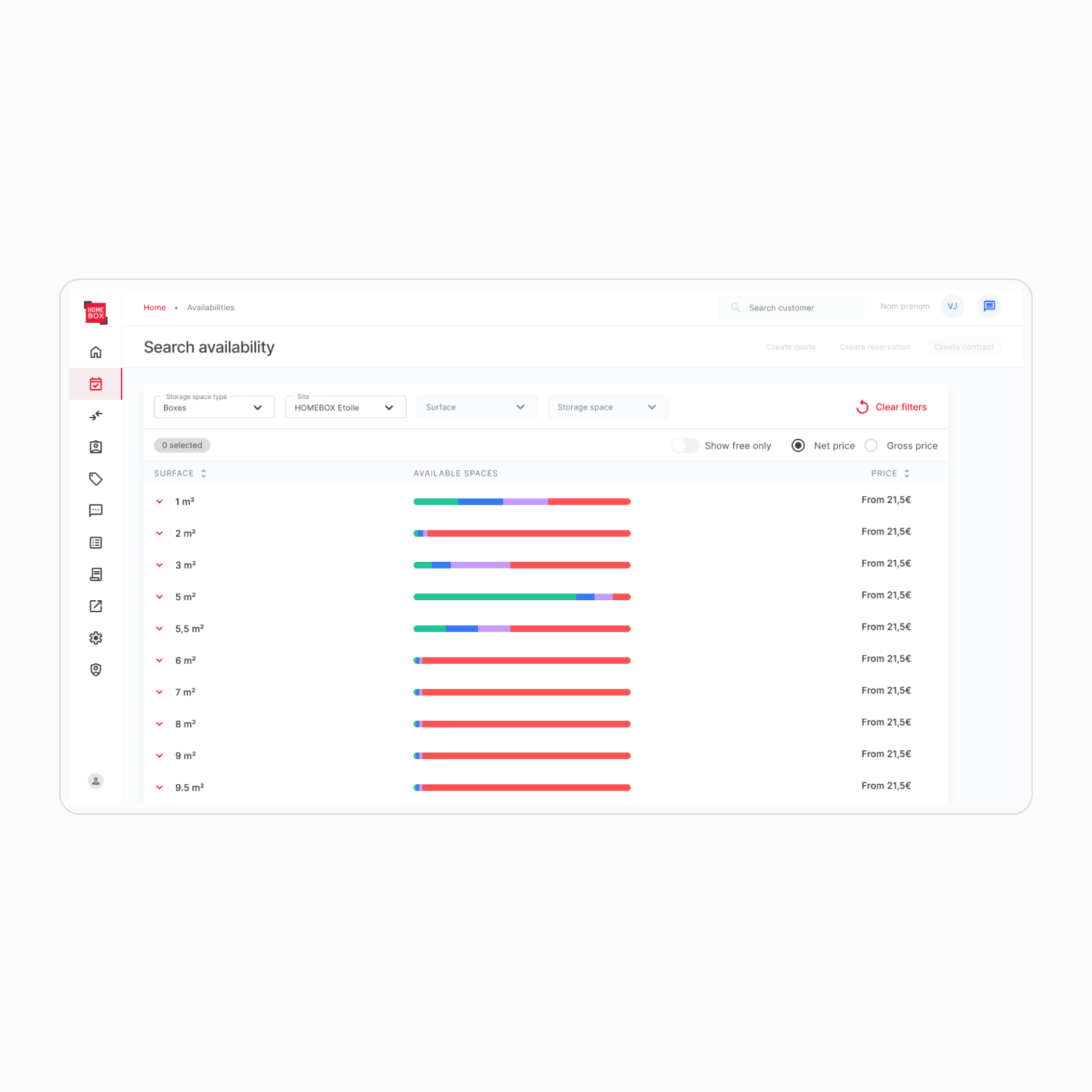
Designing the operational management tool for the French leader in self-storage.
The Homebox group, the French leader in self-storage, wishes to modernize its management tools for its agencies and franchisees. To achieve this, it plans to completely replace the old tool currently in use with a new one called ‘Ariane,’ which is under development.
This tool change is happening for several reasons:
- to modernize the technical stack used,
- to improve overall ergonomics,
- to integrate new key functionalities essential for managing Homebox's activities.
My role as a Product Designer in this mission was to oversee the design of Ariane, from Discovery to Delivery, across several key features of the tool.
- Team size: 5 FE developers, 4 BE developers, 2 QA, 1 Product Manager, 1 Product Designer
- Time spent: 26 months
- Features shipped: 10+
A deep understanding of Homebox's business
To ensure a good understanding of the Homebox environment, several discovery elements were implemented:
- User interviews in agencies
- Workshop facilitation with stakeholders
- User testing campaign
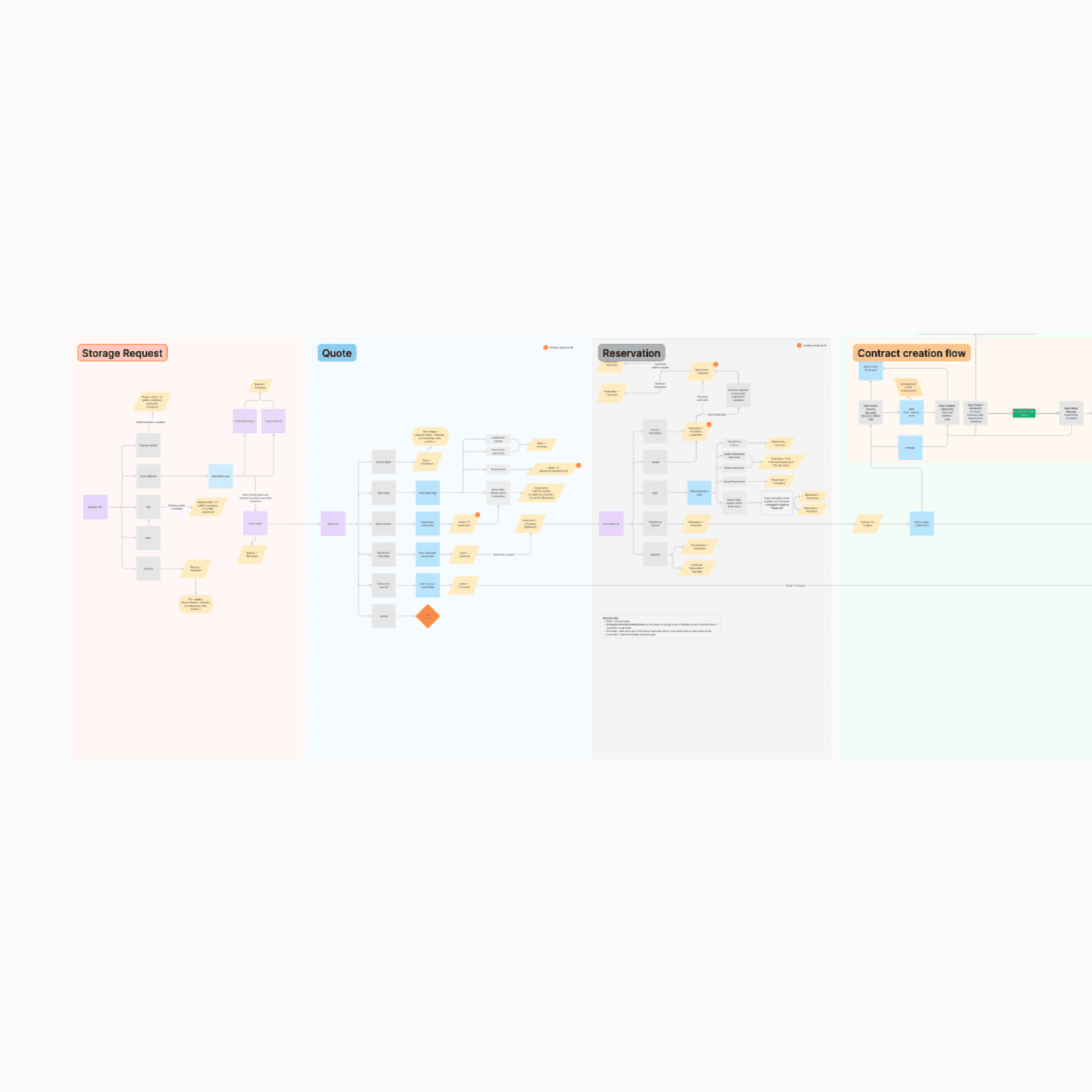
- Business process mapping
Deep Dive: Pricing Grid Simplified
The pricing grid is essential for managing a Homebox agency's operations. It enables the agency manager to influence both occupancy levels and overall profitability. However, modifying the pricing grid is a complex process that requires time and access to key center-specific information.
→ The current tools available do not allow managers to perform their tasks efficiently or to regularly manage their pricing.
3,2
+300%Average grid price's updates in a month
-55%
Time passed on the grid price
92%
User satisfaction
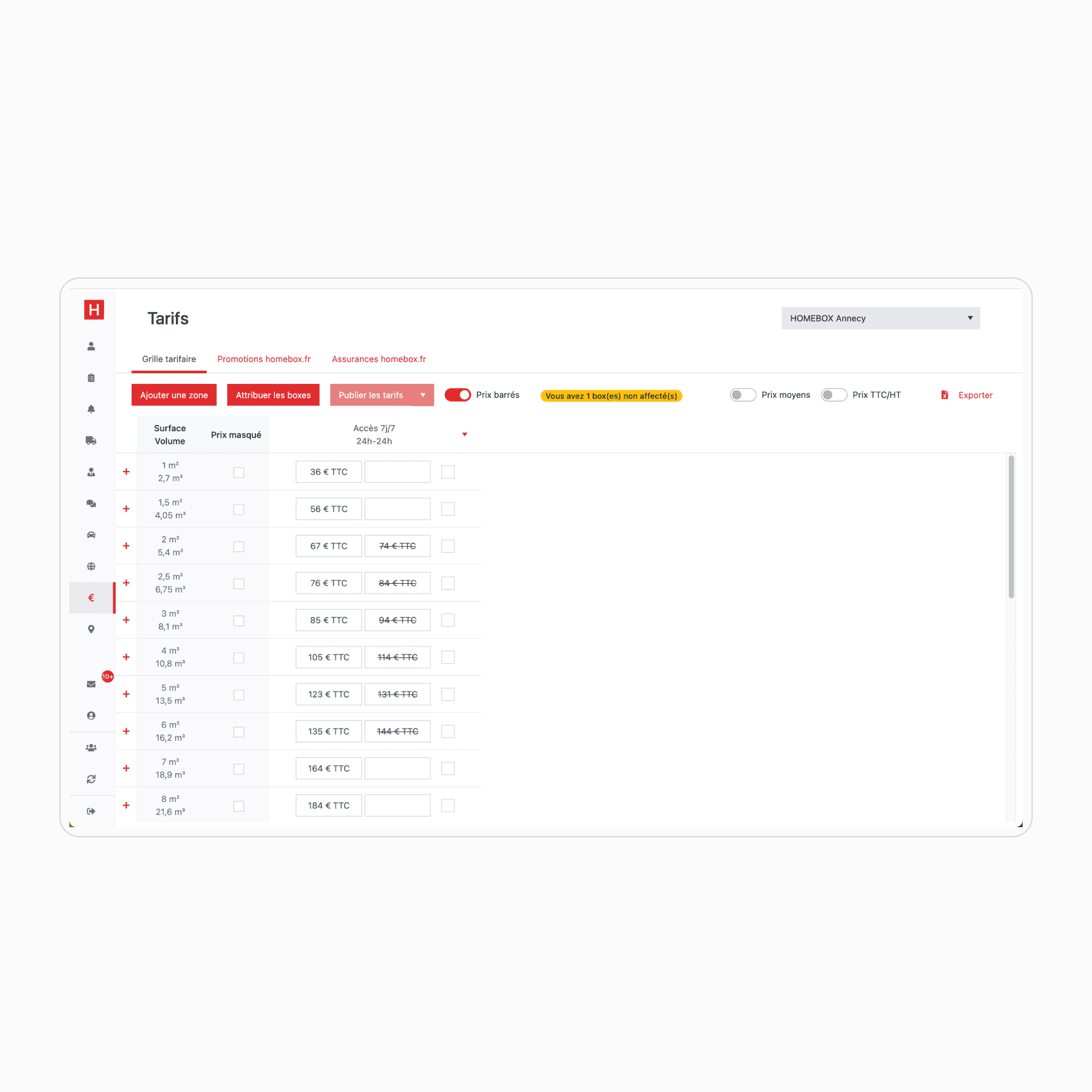
Current implementation
Existing feature scope
Today, the pricing grid is managed in two separate parts:
- An online tool used to update and publish prices
- A separate Excel file used by agency managers to determine optimal pricing based on a set of key parameters
Following user interviews and testing, we identified the following issues:
- Manual price changes still performed directly in the agency
- Lack of key data (e.g. occupancy rate, average price)
- Slow and non-ergonomic input process
- Repetitive actions required to complete the file
- No connection with the current pricing grid
Proposed Solution
To overcome the current limitations, we propose a unified and intuitive pricing management tool with the following features:
1. A more detailed and dynamic pricing grid, tailored to the specific characteristics of each center
2. An integrated recommendation engine, suggesting the optimal price based on key parameters such as unit type, occupancy rate, and market context
3. Centralized and real-time price updates, eliminating manual work at the agency level
4. Seamless access to critical data (e.g. occupancy rate, average price, performance trends) to support decision-making
5. A streamlined, user-friendly interface, enabling quick adjustments and minimizing repetitive actions
The new grid price
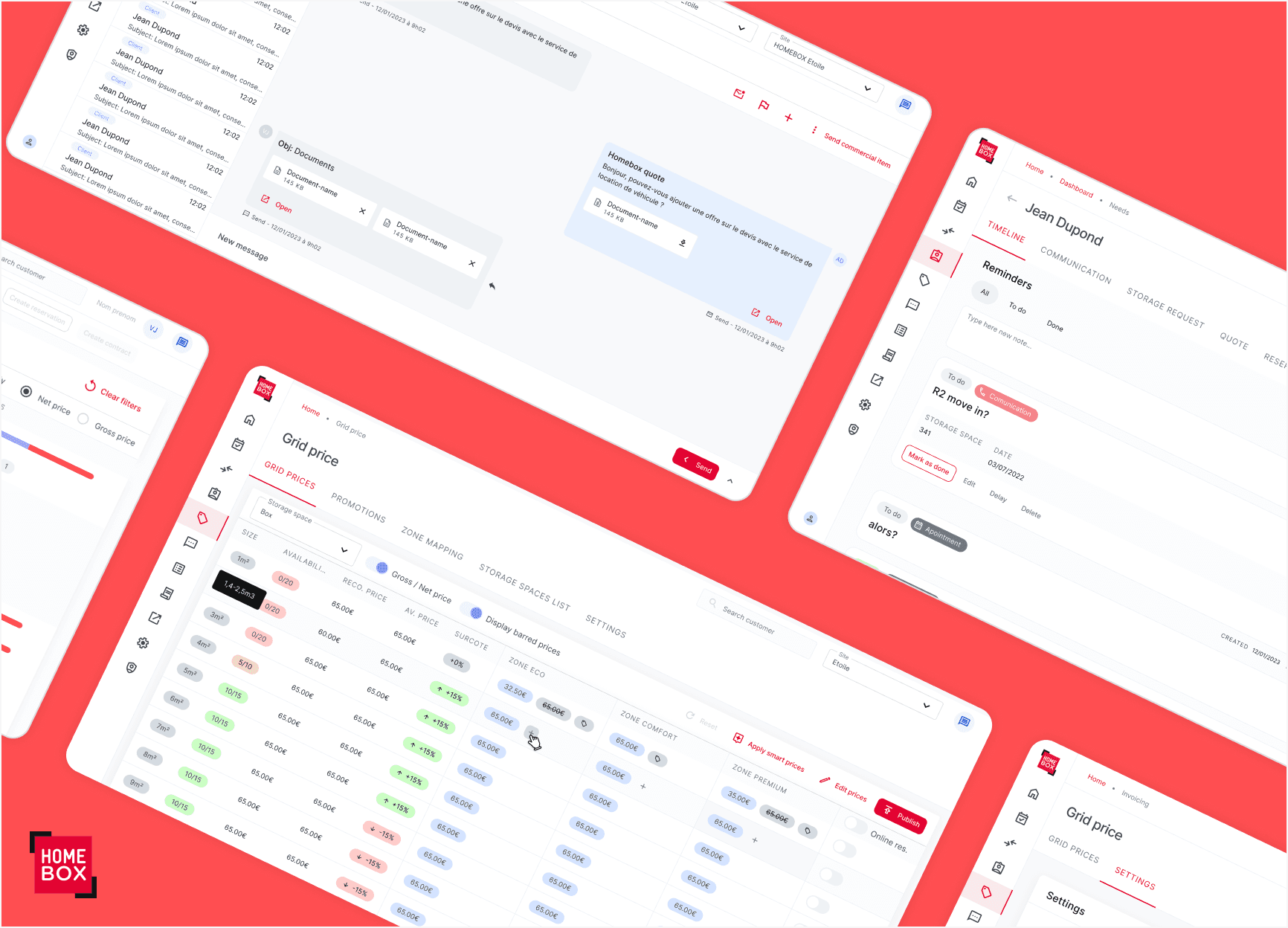
The new pricing grid gives agents direct access to key information, enabling them to better tailor prices to the specific situation of their center.
Additional features have also been introduced to address the various needs identified during the user research phase:
- Visualize promotions and their impact through strikethrough pricing
- Toggle between net and gross prices for greater clarity and flexibility
- Enable or disable online reservations by unit size, depending on availability or strategy
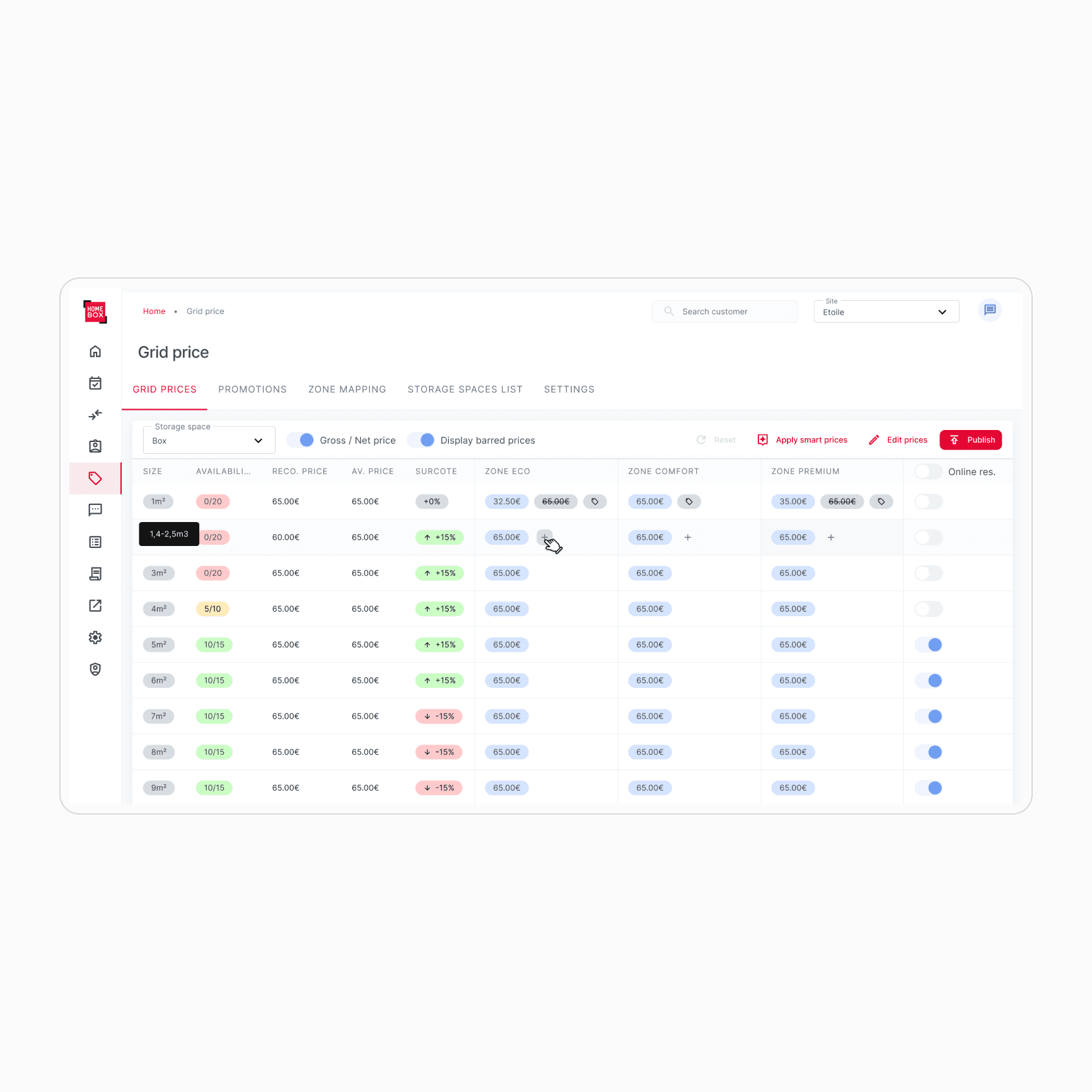
New proposition
Other features delivered
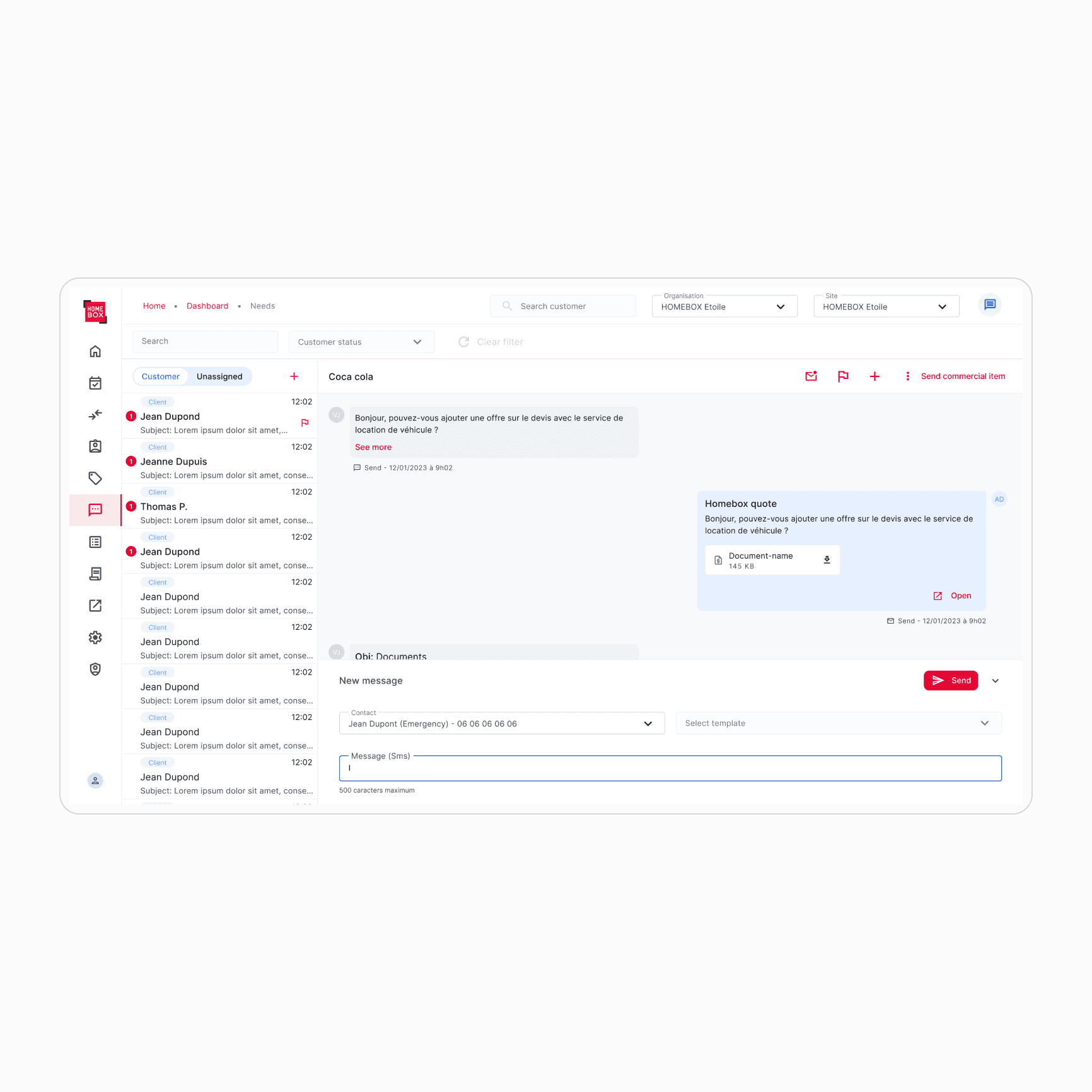
Messaging
A fast and reliable way to communicate with the agency client.
244 sec
Average respond time
94%
User satisfaction
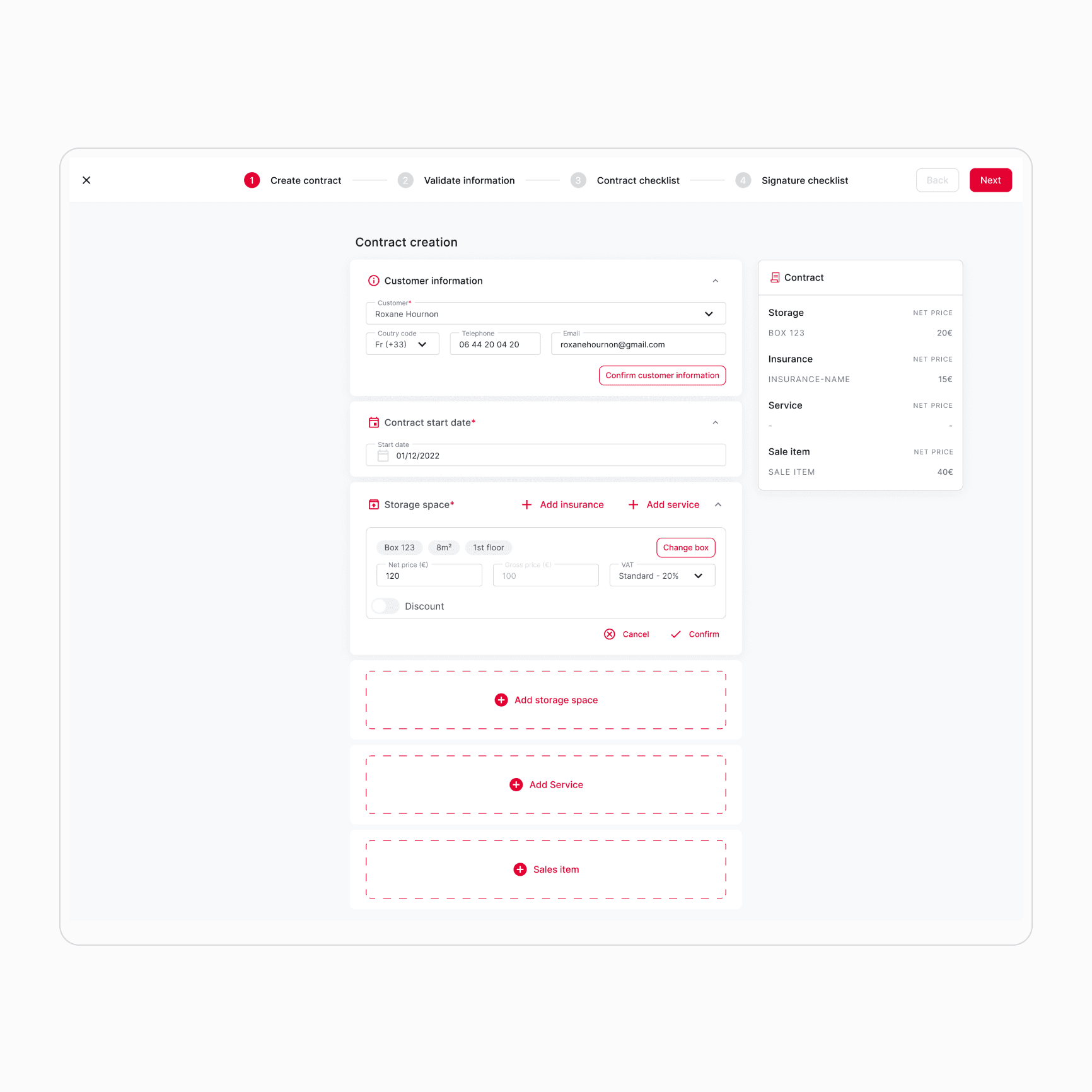
Contract creation
Improving the speed to create a client contract.
50%
Faster contract creation